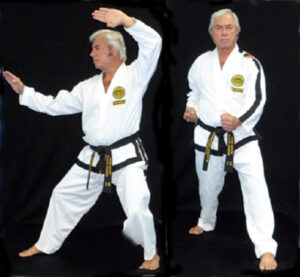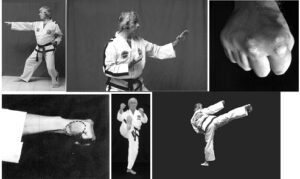
Looking back on the practice of our art, I am inevitably compelled to accept the inexorable passage of time. Through a twist of fate, I was among the students who took up this activity in the late 1960s and also part of the group of pioneering Western instructors who helped spread it in Argentina. Although many years have passed, it feels like only yesterday that we were contending with the Japanese arts (Judo and Karate)to gain acceptance for Taekwon-Do as a new martial art, introduced in 1967 by emissaries of General Choi to propagate his creation.
A great deal of time has passed since then, and we have gained a wealth of experience along the way. Everything was conveyed to us in the broken language spoken by those who introduced the activity. There was no theoretical information available until the early 1970s, with the arrival of a small batch of books from the fledgling ITF; however, since they were written in English, only a few of us could read them. By and large, we had all accepted the idea that we were learning and teaching Korean Karate, as that was the only way to gain a foothold in the martial arts scene of that era, which was still in its early years.
The technical aspect was idealistic; while patterns were indeed practiced, they were treated as secondary to the practical application of techniques for self-defense. Since the early training venues featured canvas mats laid over sawdust (originally installed for Judo) the instruction included the rudimentary throws we practiced. Competitions did not exist until 1975, when the first national tournament for blue/red belts and Dan ranks was organized; held on a single ring side, it drew an unexpectedly massive crowd—so large, in fact, and that many people were turned away because the venue (the old Obras stadium, which no longer exists) was packed to capacity.
The demographic shifts and the evolution of skills from that time to the present have been so profound that only those of us who experienced both eras can truly grasp them. Consider elements such as protective gear and uniforms—which, in the early days, were essentially *karategis* (standard karate uniforms). The early 1980s saw the establishment of the first legally recognized organizations and the development of more sophisticated teaching methods. The proliferation of schools across the country was remarkable; the growth in participation was such that the art came to be regarded as the most significant sporting phenomenon of that decade.
To better appreciate this evolution, one must remember that from the art’s introduction until the 1990s, neither the internet nor mobile phones existed. Promoting an organization required methods far more rudimentary than today’s—such as distributing flyers, advertising in the few specialized magazines available at the time, and holding demonstrations, practices that have since fallen out of use.
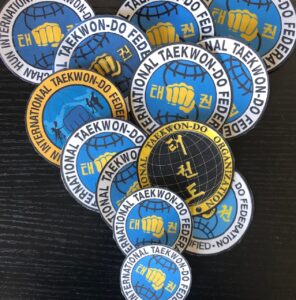
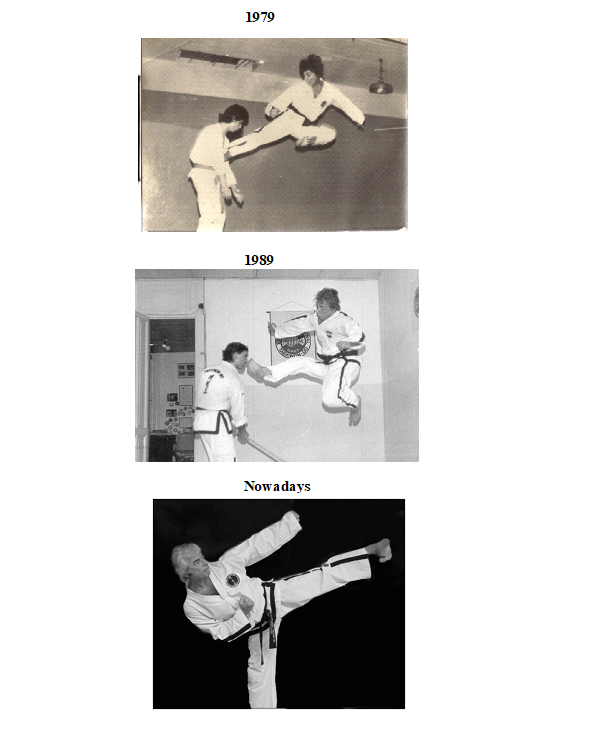
What has been said is a concise summary of the events of the last 58 years regarding the system created in 1955 by General Choi Hong Hi. The history of the art in Argentina mirrors that of the rest of the world, as the country gradually became part of the rapid expansion of the international federation that governed Taekwon-Do until 1973. Due to political decisions that remain difficult to unravel even today, the discipline split at that time into two regulatory bodies. The new entity introduced a different sporting biomechanics that curiously also use the name Taekwondo. Efforts to promote the art have always been driven by individuals who went to extraordinary lengths to make its practice accessible; demonstrations, typically conducted without the backing of a formal methodology, required participants to rely on imagination and personal risk-taking demonstrations (a practice that has since then fallen out of use).
Old 24mm film footage and black-and-white photographs still bear witness to this whenever they are recovered from archives or the personal collections of long-time practitioners. For today’s generation—saturated as it is with digital technology on personal computers and modern mobile phones featuring built-in cameras and video capabilities that were unimaginable back then, the absence of such methods seems almost incredible yet, that is simply how things were. Nowadays, young children handle these tools more adeptly than the adult professionals who had to learn to use it and incorporate them into their lives as the new innovations of progress.
The observations presented here offer a concise overview of the evolution of technology and life itself. «Everything changes, everything changes,» went the lyrics of a song from that era.
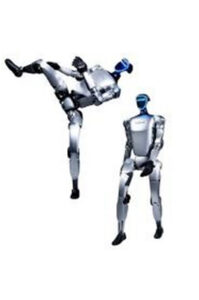
I believe that one reason demonstrations of the art have fallen out of use is that the skills displayed in such settings can now be recreated by artificial intelligence.
However, in the face of this new challenge and potential skepticism, we must bear in mind that while we cannot teach to artificial intelligence but we certainly can teach the human beings who wish to join us. Art is learned through practice and the guidance of a qualified instructor, not by watching a screen. Digital information can never replace the guidance of the person who helps a student evolve during every training session. And while AI can contribute concepts, it cannot replace an opponent in combat or the instructor. Thank you for your time.
SGM Ricardo Desimone
To be aware read the previous notes